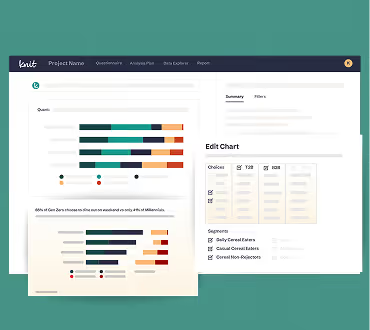
Scoping

Better outputs start with better context.

Every Knit project begins with a scoping flow that captures your objectives, audience, and the business context behind the ask. From that conversation — with an AI agent, your dedicated researcher, or both — Knit generates a Research Brief that makes every output relevant to your actual business question, not just the survey topic.
Scoping Your Research

Your researcher gets to know your business before a single question is written.

Most AI tools start with a blank prompt. Knit starts with context. You can kick off a project directly in Knit — answering a set of researcher-quality questions at your own pace directly in the platform, or work with your dedicated Knit researcher on a scoping call. Either way, what comes out is the same: a high-quality Research Brief that drives every output downstream.

The Scoping Flow
AI-Generated Research Brief
Your Context, Carried Forward
No More Starting From Scratch
The Scoping Flow

Knit gives you two ways to scope a project. You can scope a project directly in Knit — using an AI-guided flow that asks the same questions a senior researcher would: your objectives, target audience, hypotheses, and what a successful outcome looks like. Or you can run a live scoping call with your dedicated Knit researcher, acting as a strategic thought partner. Either path produces a Research Brief that drives everything downstream. The choice is yours based on what the project needs.

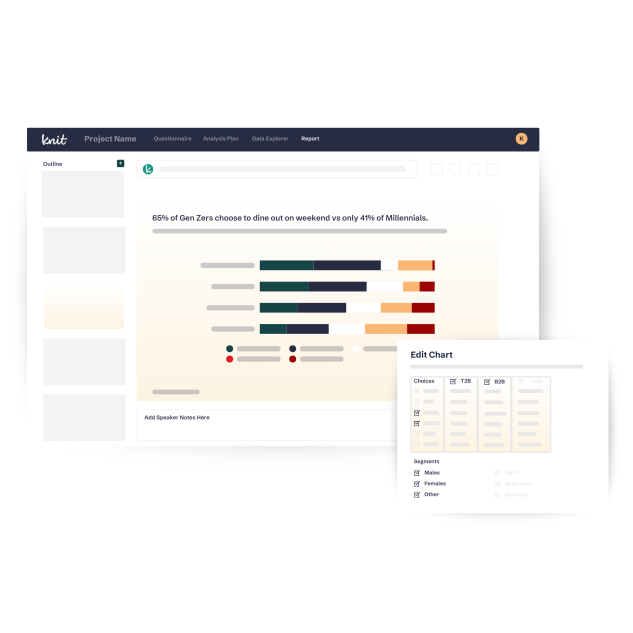
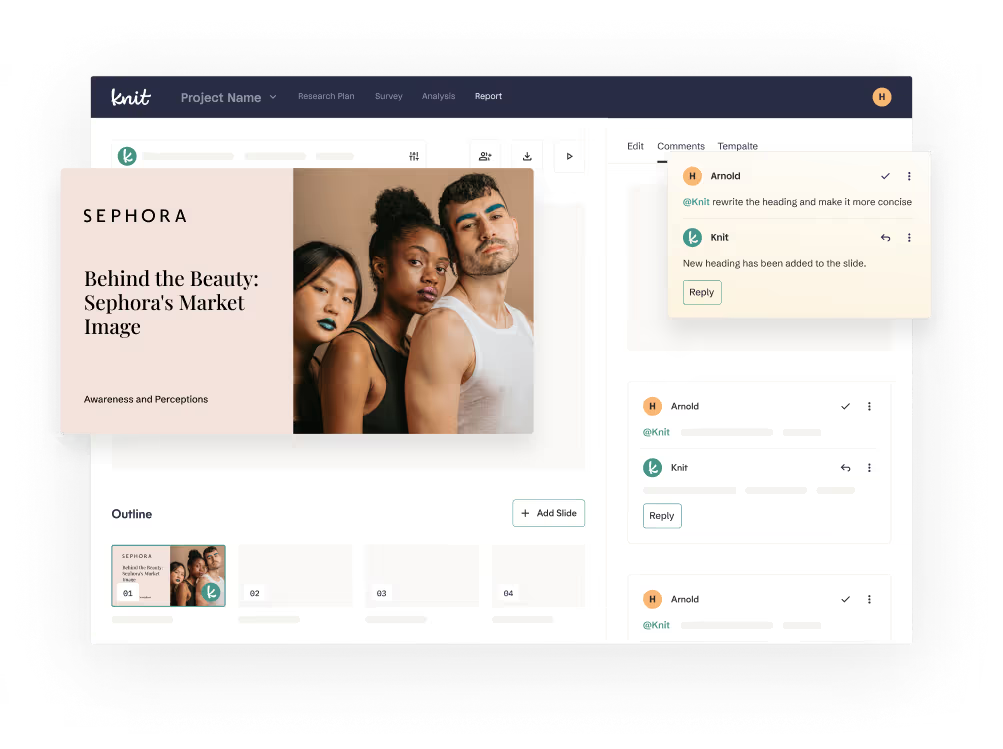
Presentation slide showing Sephora's market image with three diverse models and chat comments on editing the heading in a project management interface.
AI-Generated Research Brief

From your scoping flow, Knit’s AI generates a Research Brief — a structured document capturing your audience definition, research objectives, hypotheses, and deliverable expectations. You’re able to collaborate with your dedicated human researcher via comments, a scoping call or with Knit’s AI to get it finalized before generating your questionnaire.

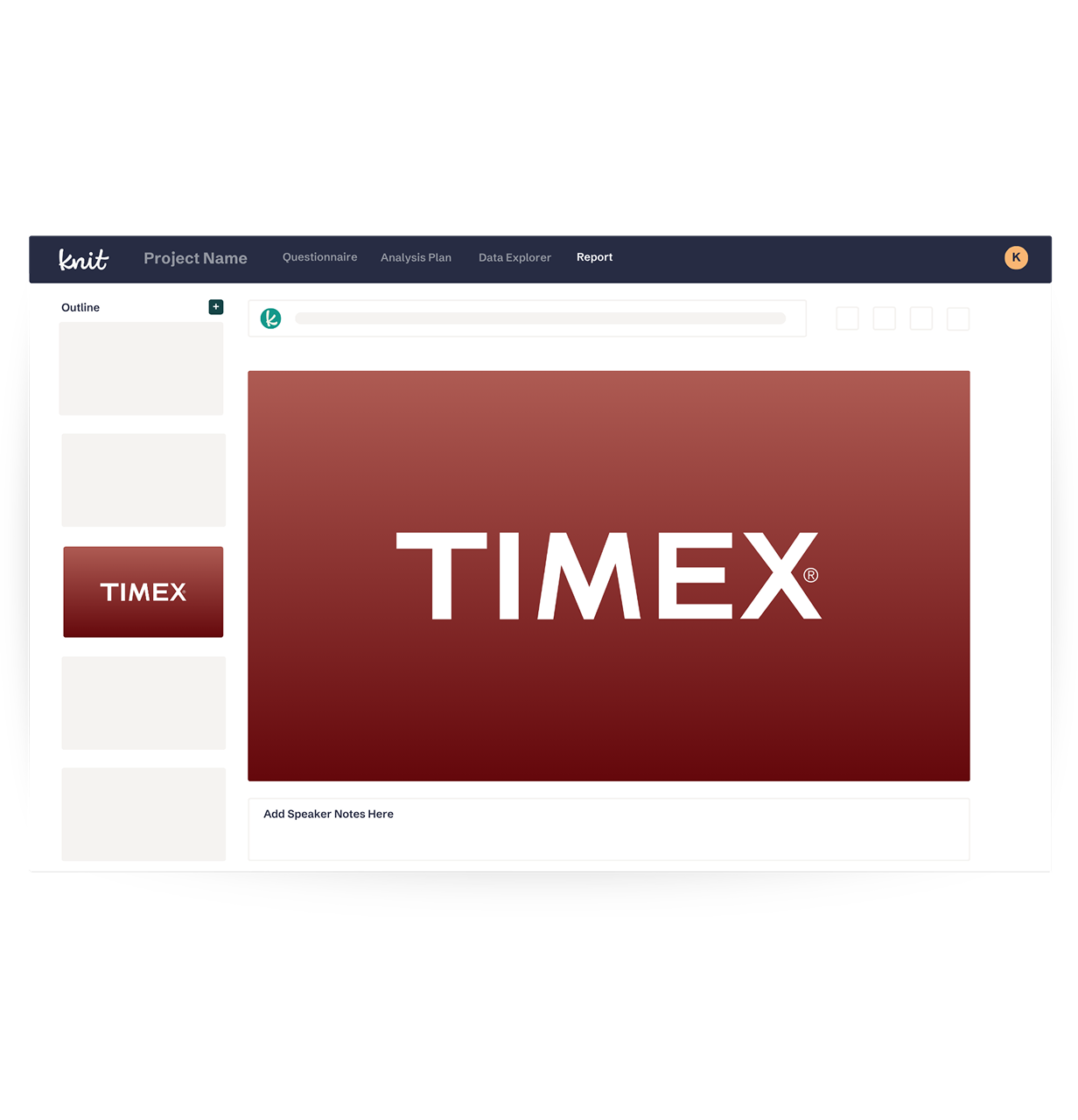
Presentation slide showing Sephora's market image with three diverse models and chat comments on editing the heading in a project management interface.
Your Context, Carried Forward

You can also share past research, brand guidelines, or examples of reports you love into your Research Context Library. Knit’s will factor those in so every study reflects how you uniquely run research. This context feeds into every output downstream. Your questionnaire is built on it. Your analysis plan references it. Your report is shaped by it. Every project you run on Knit gets smarter because of it.

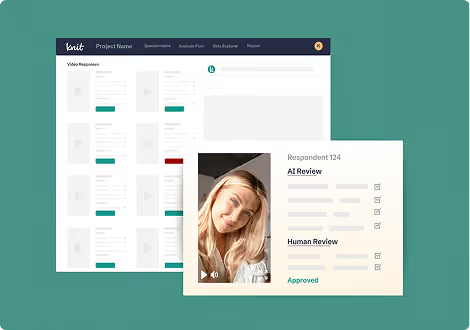
Presentation slide showing Sephora's market image with three diverse models and chat comments on editing the heading in a project management interface.
No More Starting From Scratch

Knit retains your preferences, past methodologies, and research history across projects. Every study builds on what came before — so your AI outputs reflect that institutional knowledge rather than treating every project like the first one.

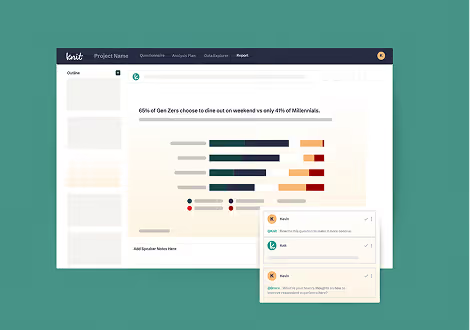
Presentation slide showing Sephora's market image with three diverse models and chat comments on editing the heading in a project management interface.
Presentation slide showing Sephora's market image with three diverse models and chat comments on editing the heading in a project management interface.Presentation slide showing Sephora's market image with three diverse models and chat comments on editing the heading in a project management interface.Presentation slide showing Sephora's market image with three diverse models and chat comments on editing the heading in a project management interface.Presentation slide showing Sephora's market image with three diverse models and chat comments on editing the heading in a project management interface.
Why scoping matters

Context is what separates decision-ready insights from generic AI outputs.

Robust scoping helps Knit understand why a question matters to your business, what your stakeholders need to see in the output, or how your company defines success for this particular study. That’s what Knit’s scoping flow captures — and it’s why Knit’s outputs feel tailored, not templated. When your researcher and the AI are working from the same context, what comes back is a high-quality narrative you can share confidently.

Orange gradient curved line looping once against a transparent background.

How NASCAR leverages fan and non-fan insights to optimize its in-season tournament launch strategy

Learn how NASCAR gathered, cut, and analyzed fan and non-fan input at scale to guide its in-season tournament launch strategy with the help of Knit.

White curving abstract line with a loop on a black background.
Illustration of a green fiber optic cable with glowing tips on a black background.Abstract black and white textured pattern with gradient shading and noise effect.
Smiling woman with curly hair holding a tablet against a teal background with abstract lines.

See what happens when AI research starts with the right context.

Book a 30-minute demo and we’ll walk you through a real study — from scoping to final report — so you can see exactly how Knit works before you commit to anything.