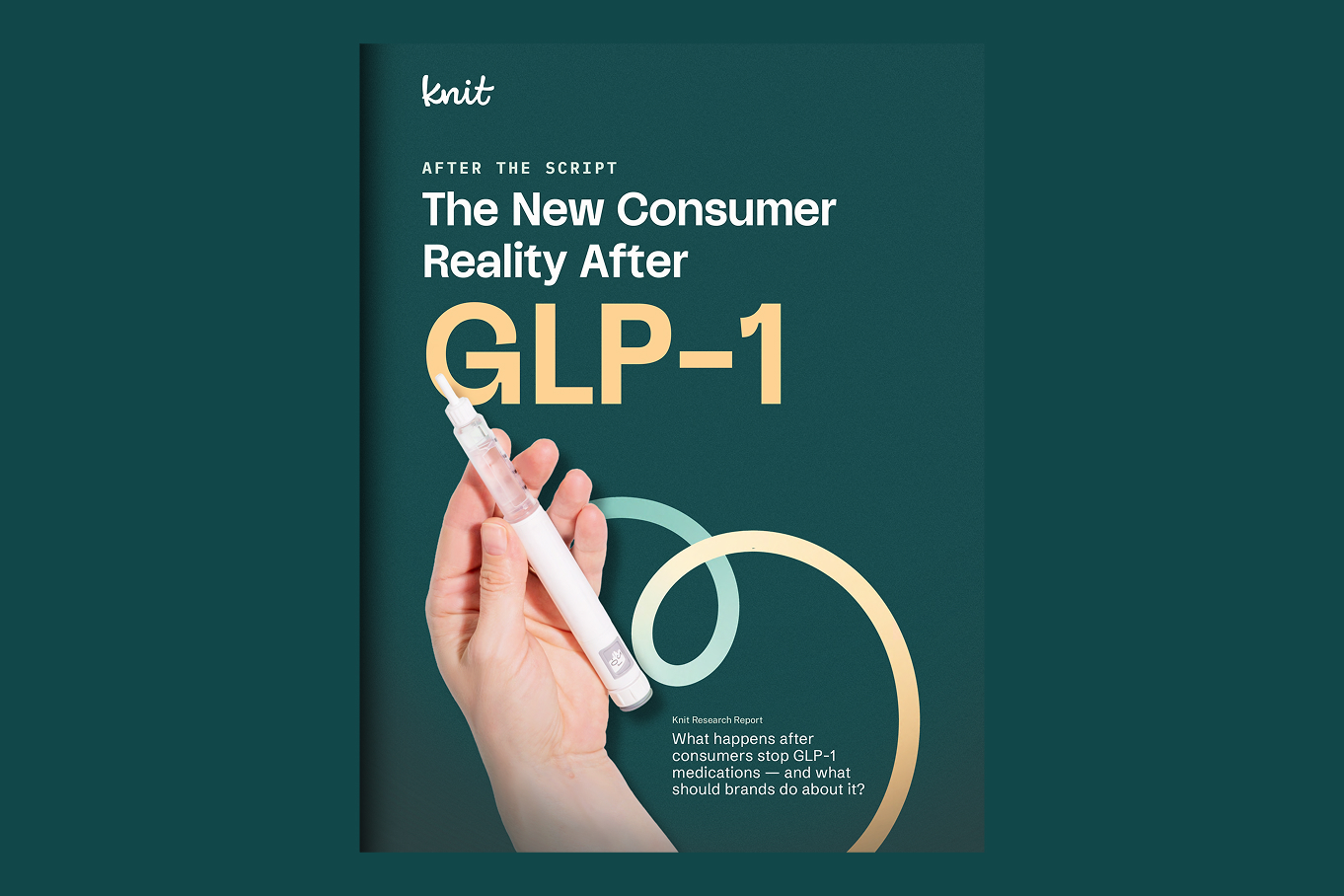

The New Consumer Reality After GLP-1
How food and beverage brands can account for the new consumer identity of former GLP-1 users.
How food and beverage brands can account for the new consumer identity of former GLP-1 users.
According to a 2025 KFF Health Tracking Poll, nearly one in eight U.S. adults stated they are currently taking a GLP-1 medication for weight loss, diabetes, or another condition. One in five acknowledged they had taken it in the past.
That’s not a small portion of the U.S. population. Large enough that the food and beverage industry has already responded to this new consumer identity, adjusting packaging, portions, ingredients, and messaging to account for them.
However, most of the industry conversation focuses on active GLP-1 users. There is exceedingly little research into the consumer identity brands know less about: the person after treatment ends.
This distinction matters because a consumer actively taking the medication is known to have a smaller appetite, fewer cravings, reduced snacking, lower alcohol consumption, and a broader mindset regarding food reconsideration. Brands plan for these consumption changes, but how many of these changes stick when someone stops taking GLP-1?
That’s what we wanted to find out. Our research revealed that GLP-1 medications do not permanently alter food and beverage behavior — nor do patients fully revert.
The post-GLP-1 consumer lives with competing truths: generally, they feel more confident and intentional. They may feel more vigilant and develop a healthier relationship with food or find themselves struggling again. Sometimes they feel in control and other times overwhelmed. And, oftentimes, they feel afraid of losing their results and feel inclined to restart the medication.
Whether you’re a food and beverage brand, retailer, restaurant, health and wellness brand, or private label, this report is designed to help you understand the growing segment that is the post-GLP-1 consumer. Here’s a taste of what you can expect:
65% of respondents report at least some lasting change in their eating habits. However, only about 19% describe themselves as permanently changed.
45% report that some changes lasted while others faded, and one-third of respondents note reverting back to exactly how they ate before starting treatment.
Loyalty is disrupted in brand relationships. A whopping 84% of participants have not fully returned to their pre-GLP-1 go-tos and now choose to buy a mix of old favorites (that account for their changed preferences) and new, healthier brands.
Amongst parent respondents, 81% cited a positive family influence. They now prioritize healthier options and focus on portion control and ingredient intentionality.
This is what makes the post-GLP-1 consumer strategically important: they are not simply a lower-consumption version of their old self. They are now a consumer with a changed decision-making framework and influence over the entire household’s food environment.
Download the report to uncover key takeaways for your brand, including packaging, formula, shelf, and messaging strategies that appeal to post-GLP-1 consumers. The brands that win won’t treat these consumers like fad dieters: you can’t assume they’re fully changed, nor can you wait for demand to “normalize.” This research will help you plan for the new reality.